
Until going to the Amazon, I had never seen a black swan in my life. In fact, I didn’t actually realize they were real: I just thought they were something popularized by the hit Natalie Portman film of the same name and more a metaphor for the rare and unexpected.
It turns out they’re very real, and I’ve now seen three black swans, including one that walked up to me in a Brasilian zoo at midnight (another story for another day).
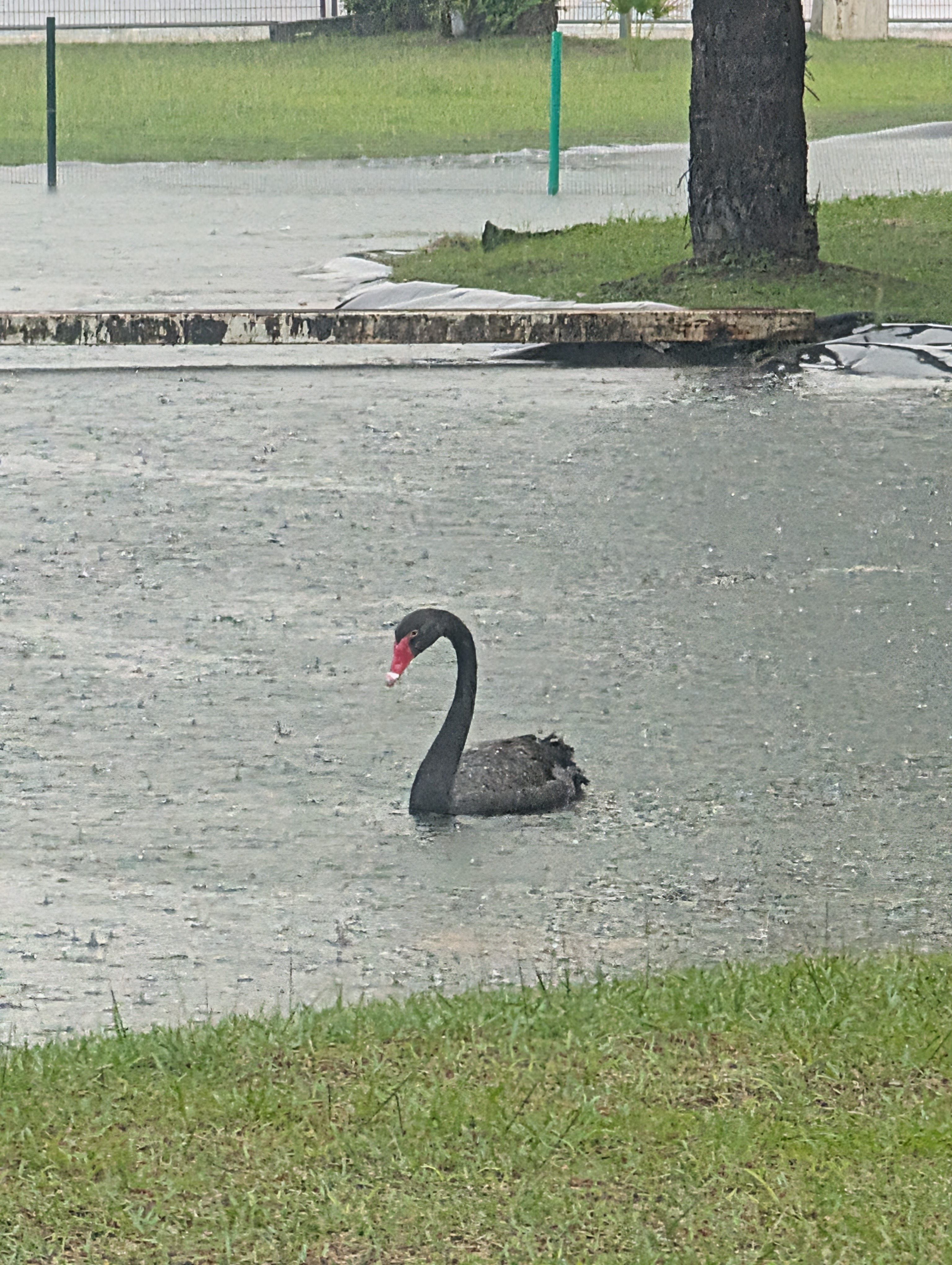
They are beautiful creatures – gliding with grace on the water, all black save red-orange colors on and near their beaks. To see one, even if they’re actually far more abundant than you’d expect in nature, feels special and unusual.
For the last few weeks, “black swans” have been everywhere, it seems, especially at COP30, the thirtieth Conference of the Parties – the UN’s premier climate conference that year-after-year has pretended to take meaningful action on climate while always falling so pathetically short it’s as if it didn’t happen at all.
There will, of course, be naysayers to this argument who will point to the Paris Agreement (which is already dead as we’ve passed 1.5C) or to major financial promises to help Global South country’s transition to a green economy, and I suppose something is better than nothing, but when these naysayers are great-grandparents and their grandchildren are starving due to decades of drought and crop failure, I guess they’ll be able to pat themselves of the back for “having made some real progress” once.
I could cynically go on and on about this point: fossil fuel and agriculture lobbyists everywhere at COP30, mainstream media missing from the blue zone and almost none of those who were there came to report on climate change with even the slightest bit of integrity or honesty, the militarization that kept indigenous people out while it also kept the lobbyists safe, the end-of-the-conference refusal to so much as even mention “fossil fuels,” which is particularly insane given that the choice for our very survival as a species is between urgently phasing out fossil fuels or embracing mass death – and we’re consistently choosing the latter.
But for all my cynicism – and make no mistake this COP was yet one more failure among many – I also think there was a significant vibe shift this year. Of course, if the world could run on vibe shifts, we may be better off. In reality, it’ll take much more than that. But I don’t think we should discount what looks to be underway.
…which brings me back to the black swan.
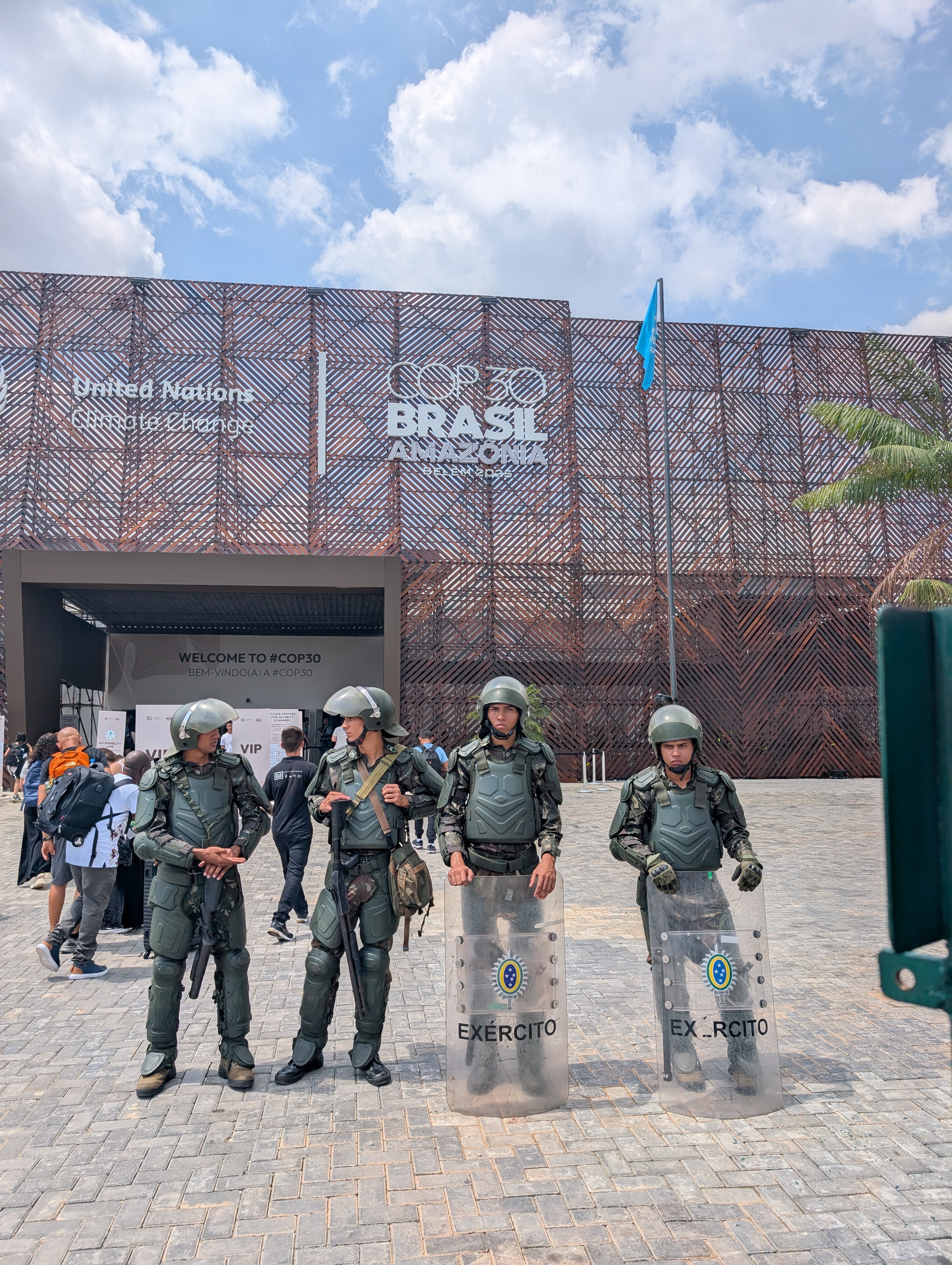
Very few people knew that a group of indigenous activists were going to storm or blockade the gates of COP30. It caught everyone by surprise. The action earned global press attention and prompted a ridiculous move by the UN to demand that Brasil beef up security, making for scenes of men in riot gear holding back indigenous children from getting too close to the entrance.
Their disruption on COP was beautiful, unexpected, a black swan that forces everyone to pause and take note of what we’re actually doing – or what we aren’t doing at all.
Where COP failed to produce meaningful action, some 80+ countries are now seeking a roadmap to a fossil fuel phaseout for the first time, and a conference is planned for Colombia to host such a dialogue. We’re much closer to a Fossil Fuel Non-Proliferation Treaty now, perhaps, than we’ve ever been before, and while there’s quite a few reasons for this – the hard work of incredible diplomats and artivists – I’m convinced that the momentum stems from those on the radical flank, like the indigenous activists who stormed the front gates, whose willingness to shock us with their own urgency then creates the narrative cover for everyone else to step up and do what needs to be done.
I kept thinking this past week, “What if there had been activists pressuring their governments in their home countries at the exact same time activists were storming the front gates of COP?” I think this would be a very different conversation. I would be writing about COP’s breakthrough success.
Movements make the impossible inevitable. It’s easy to turn up our noses at them because the tangible change is so often measured solely by the legislation written by policy wonks and high-level advocacy groups, who do indeed play a crucial role at getting us over the finish line, but as an ecosystem, systems change doesn’t happen without a radical flank leading the way – paving the path to empower those groups.
More importantly, movements must be funded, and the people who have the foresight to know and value this are, themselves, black swans. Trust me when I say they are truly rare and special. I think this is because it’s a common misconception that protest actually happens organically. But that’s not quite right. Martin Luther King, Gandhi, and Jesus – all funded.
I don’t know how long it takes to get us from where we are today to a Fossil Fuel Treaty that’s urgent enough to move us away from the oil industry with the speed we need to ensure our survival. But I know if we don’t have a mass movement leading the way, the chances of getting there diminish quickly.
How, then, do we find enough swans to swim us upstream where we need to go?
The irony is that there are actually quite a lot of black swans – literally and metaphorically. They are not – yet – an endangered species, though this could shift for them and so many others if we don’t act. In the meantime, do they come out of the woodwork? Do we get to see them dance their dance on the water? Do we create the environment that allows them to flourish, or will it be the same damn nuisance geese who year-after-year squawk and holler their talking points and flood us in their feces?
There’s going to be a lot of geese on their way Turkey for COP31. But between now and then, the world may get to know the black swan a lot better.
Discover more from saunterings
Subscribe to get the latest posts sent to your email.
